

Choosing the Right App for a Beginner Pianist
Always, a search for the right learning tool marks the beginning of the musical journey. Much depends on the correct choice of an app how fast and easily the beginner will master the keys and basic notions of music. It is in the first weeks that the basis forms, which will support further growth of skills and inspiration. This guide covers Talented vs Simply Piano, a practical feature comparison of piano apps with real learning features and a clear app breakdown to match your learning curve, lesson scaffolding, and curriculum scope.
For a quick onboarding checklist that aligns UI comparison and lesson depth, click here.
Moreover, it has to be not just a convenient interface-the app-but also a helper able to adapt to the level of the student, to explain complicated things in accessible language, and to keep up motivation when the first mistakes seem insurmountable. As developers of specialized musical software, we are deeply convinced that a proper choice of the platform can save time, avoid disappointments, and make learning a pleasure.
The main criteria that express the importance of choosing an application for beginners can be presented as follows:
- Simplicity of data perception without overloads.
- Interactivity and clarity of educational material
- Flexibility of approach: from the most basic lessons to gradual complication
- The possibility of regular feedback and process adjustment
- Motivational support through gamification and positive reinforcement
Without such elements, it will be a slow or monotonous progress, often the reason such lessons get dropped altogether. Consequently, it is especially important to stress the following: how the app builds interaction with a beginner is the key to a successful start. Performance analytics, user reviews, and retention rate signals can help validate the choice beyond marketing.
Interface and User Experience
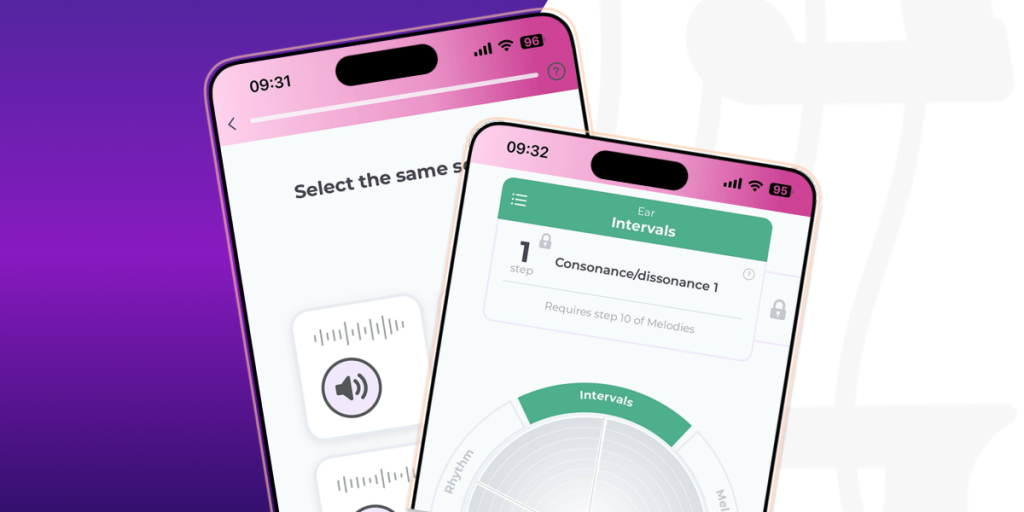
Immediately after the first view of the screen, the transition to the practical aspects of learning starts. The interface serves as a bridge between the user and the music world inside the app. It should be intuitively clear, logically structured, and tuned for gradual familiarization with functionality.
Interface Criteria Table
| Criterion | Optimal Option for Beginners | What Can Complicate |
| Clarity and simplicity | Minimalistic design, no extra buttons | Overload: many icons and confusing menus |
| Navigation | Step-by-step hints, easy-to-find lessons and settings | Confusing sections, lack of instructions |
| Visual feedback | Real-time tracking of key presses | Lag, no animation, using complex indicators |
| Adaptability | Ability to customize the interface | Rigid fixed elements, no customizations present |
Our app provides the following to make the learning curve as gradual as possible: an interface that is introduced step-by-step, with hints given in every stage; bright, clear visual signals for correct and incorrect play; options to choose genre and tempo available right on the main screen; the ability to quickly receive feedback and results from each session. Thus, whatever level a user starts from, the interface turns into a reliable guide for comfortable and exciting immersion into the art of piano playing. This also supports feature comparison across apps for UI comparison, feedback latency, and interactive feedback quality.
Methods and Approaches to Learning
Basically, the most important thing in choosing an app for studying piano is to see the method of presenting basic musical knowledge and skills. Though both are oriented for beginners, the approaches used in Talented and Simply Piano differ, each having its merits.
Talented presents step-by-step instruction in a structured way with an emphasis on theory and practice in harmonious combination. The method is based on breaking material into small lessons which logically progress from simple to complex:
- Reading music notes, rhythm, and durations: the basis of music literacy.
- Practical exercises focused on playing technique.
- Music theory basics: intervals, chords, and scales.
- Interactive activities requiring application of learned material.
This approach will not only facilitate playing mastery but also form a very strong foundation for further development. Video lessons are included, along with interactive tests and personalized recommendations based on the learner’s progress. The focus on lesson depth, adaptive drills, and data-driven learning aligns with serious learners seeking learning features that scale.
Simply Piano, on the other hand, bets on intuitive learning through play and repetition. The focus here is on quick immersion into the creative process, which is especially appealing to those who want to play recognizable songs right away:
- Interactive lesson design allows playing along with the app.
- Gradual increase in difficulty of composition, starting from simple melodies.
- Real-time feedback: The app listens to play and indicates mistakes.
- Motivational features such as achievements, levels, and extra bonuses will give a game-like effect.
Thus, Simply Piano contributes to the creation of muscle memory, improving auditory perception, which is conducive to fast skill development. The gaming format reduces fear barriers and sustains interest in practice. This is a friendly app breakdown for beginners favoring instant wins and time-to-value.
Variety and Quality of Learning Content
It is not possible to give any objective judgment as to their effectiveness without taking into consideration what learning materials are provided. Talented and Simply Piano take different approaches to repertoire breadth versus depth of content.
Talented delights users with its extensive catalog including:
- Classical works from pianists of various levels.
- Contemporary pieces and popular melodies adapted for learning purposes.
- Unique exercises for improving technique and the musical ear.
- Specialized programs in improvisation and composition.
Professional recordings and attention to detail support quality so that students can feel the atmosphere of real musical performance. Such a format will suit those who strive not only to learn how to play notes but also to understand musical intonation and nuances. This favors curriculum scope and feature granularity for long-term growth.
Despite the lighter style, Simply Piano does not lag behind in variety and offers:
- A large repertoire of all types of songs, ranging from classical and jazz to pop and rock hits.
- Gradual increase in difficulty within the compositions themselves, educational tracks for rhythm and coordination development.
- Memory and ear training through interactive exercises and games.
Such diversity helps the beginner not stick at one level but develop comprehensively. Another important point is that Simply Piano constantly updates its catalog by adding more popular new songs and trends. With both apps, there’s ample content for effective learning, each in its style: Talented is more academic, deeper, and Simply Piano more entertaining and dynamic. The choice depends on the learner’s preferences and goals. In terms of piano apps, this is a practical feature comparison of song variety and trial features.
Technical Requirements and Device Compatibility
Mobile piano learning applications do have an important technical side to them, precisely. Because no beginning pianist wants to experience limitations or problems during the installation and using process of the program. Special attention to this in our development we have paid. So that every user could start their lessons as comfortably as possible without being distracted by compatibility issues.
Key points useful for future users to highlight first:
- Supported Platforms
iOS and Android support, respectively, for version 12 and above and version 8 and above accommodate the widest range of devices. Compatibility with both phones and tablets-for more convenient learning on a larger screen. - Hardware Requirements
Minimum RAM size: 2 GB for maintaining the stability of an application. A microphone is needed because this device uses a sound recognition function, which is an important element of feedback. - Connectivity with External Devices
The MIDI interface provides the interface to connect with digital keyboard instruments. Support for Bluetooth keyboards and pads: extend the training possibilities. - Internet Connection
First-time lesson and update downloads require a network connection. Offline practice is convenient after downloading when stable internet is not around.
From our side, we focus on making the installation and launching processes as facile and transparent as possible. It should, however, be noted that high performance of devices does not mean that learning will be surely achieved. But for all tools and features to work stably, minimum requirements need to be met.
A few more words on how support for different gadgets we implemented:
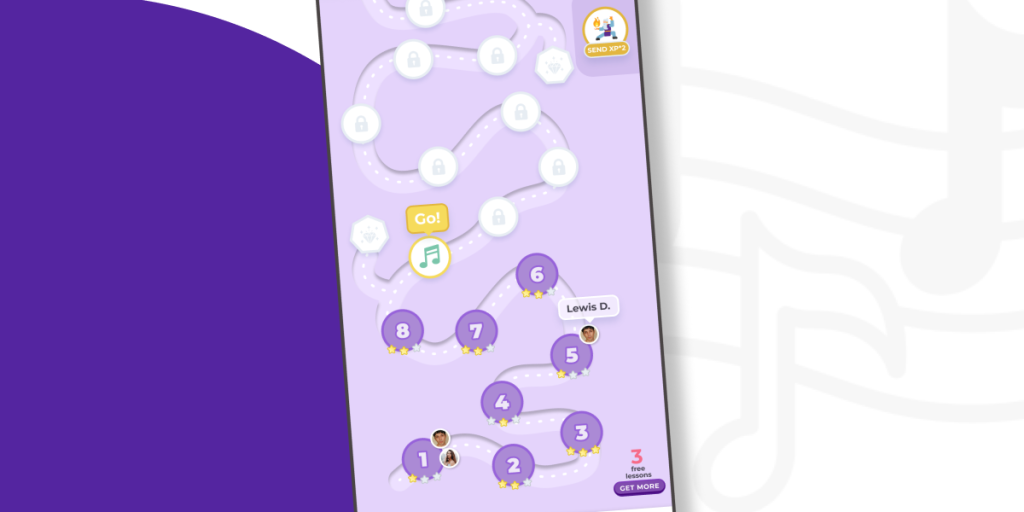
The app automatically adjusts the interface to screen size and resolution, which is crucial for all different types of models of tablets and smartphones. Work with touch control is intuitive, so technical nuances do not distract from lessons. It means that the use of modern technologies allows smooth operation even on devices of a mid-price category. What devices you find convenient for practice should be considered when choosing an app. Convenience, smooth performance, and integration with musical instruments are the priorities that we consider in the technical part of our product. Which device you use does not matter; our goal, making learning accessible and comfortable, it is. This is an area where feature comparison across pricing model, trial features, and device support matters.
Subscription Cost and Additional Services
The subscription price is going to be one of the most important factors while choosing a piano learning app. Talented and Simply Piano offer different payment models with lists of additional services that may be taken into consideration while making the decision.
Talented:
- Subscription period: monthly and yearly.
- Price: above the market average, with regular content updates included.
- Additional features: individual online lessons with a teacher, at extra cost; analytics of progress with personalized recommendations.
- Free trial: approximately 7 days.
Simply Piano:
- Payment model: monthly and yearly subscription, too.
- Price: Slightly cheaper with the family access option.
- Features include an enormous library of songs available right away, daily challenges, and in-game achievements that motivate.
- Free trial period: about 14 days, which gives more time for testing the features.
Final Decision
Summing up the comparison, some key points can be outlined which will help in finding out which app will be your best companion in mastering keys.
In conclusion, it is worth choosing Talented if the task is not just to play chords but to understand music wholly. Simply Piano will be a great start if there is a need for ease, quick results, and game-driven motivation. Of course, in both cases, it will be prudent to use trial periods to assess by yourself the convenience and style of material presentation. For readers seeking an app breakdown, this is a practical feature comparison that maps to your learning curve and performance analytics goals—and it neatly captures the essence of Talented vs Simply Piano.

